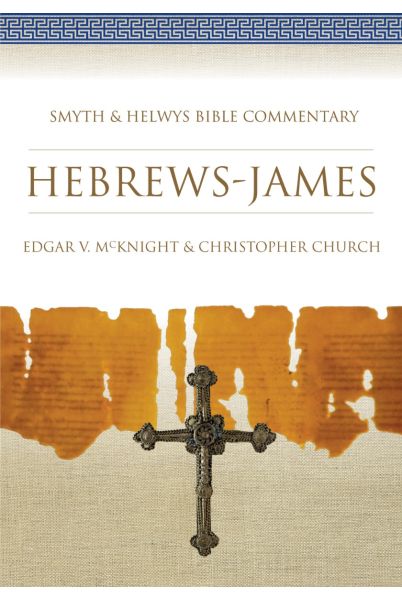
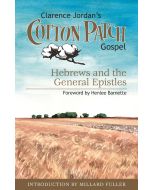
In his commentary on the Letter to the Hebrews, New Testament scholar Edgar McKnight explores the two aspects of Hebrews as covenant--the appeal to the perfection and finality of Jesus Christ and the exhortation to faithfulness based on that appeal. He also highlights the interpretative strategies of the author--strategies that are often strange to modern readers. By bringing the ancient text into the world of present readers and to take readers back to the world of Hebrews, we are able to frame the author's treatment of the problems of our spiritual ancestors from the perspective of our modern world and problems presented in our pilgrimage.
One helpful way to think about the Letter of James is to view it as one might an important archaeological discovery or artifact: it is a surviving representative of a once-flourishing Jewish Christianity. The Letter of James reveals a form of ancient Christianity that is distinctly different from the Pauline line that later predominated. In this portrayal of an early Christian community, we find concerns over ethical responsibility and social justice that continue to define Christian communities today.
Edgar V. McKnight was the William R. Kenan Jr. Professor of Religion Emeritus at Furman University. He was co-editor of The New Literary Criticism and the New Testament.His research and writings on hermeneutics and reader-oriented literary approaches to biblical texts has equipped him for the writing of this twenty-first century postmodern approach to the shaping of Jesus Christ.
Christopher Church serves as Professor of Philosophy & Religion at the Baptist College of Health Sciences (Memphis, TN) as well as Ethics Consultant for St. Jude Children's Research Hospital, where he chairs the clinical Ethics Committee. He is a graduate of the University of Georgia and the Southern Baptist Theological Seminary.
In his commentary on the Letter to the Hebrews, New Testament scholar Edgar McKnight explores the two aspects of Hebrews as covenant--the appeal to the perfection and finality of Jesus Christ and the exhortation to faithfulness based on that appeal. He also highlights the interpretative strategies of the author--strategies that are often strange to modern readers. By bringing the ancient text into the world of present readers and to take readers back to the world of Hebrews, we are able to frame the author's treatment of the problems of our spiritual ancestors from the perspective of our modern world and problems presented in our pilgrimage.
One helpful way to think about the Letter of James is to view it as one might an important archaeological discovery or artifact: it is a surviving representative of a once-flourishing Jewish Christianity. The Letter of James reveals a form of ancient Christianity that is distinctly different from the Pauline line that later predominated. In this portrayal of an early Christian community, we find concerns over ethical responsibility and social justice that continue to define Christian communities today.
Edgar V. McKnight was the William R. Kenan Jr. Professor of Religion Emeritus at Furman University. He was co-editor of The New Literary Criticism and the New Testament.His research and writings on hermeneutics and reader-oriented literary approaches to biblical texts has equipped him for the writing of this twenty-first century postmodern approach to the shaping of Jesus Christ.
Christopher Church serves as Professor of Philosophy & Religion at the Baptist College of Health Sciences (Memphis, TN) as well as Ethics Consultant for St. Jude Children's Research Hospital, where he chairs the clinical Ethics Committee. He is a graduate of the University of Georgia and the Southern Baptist Theological Seminary.

Login and Registration Form