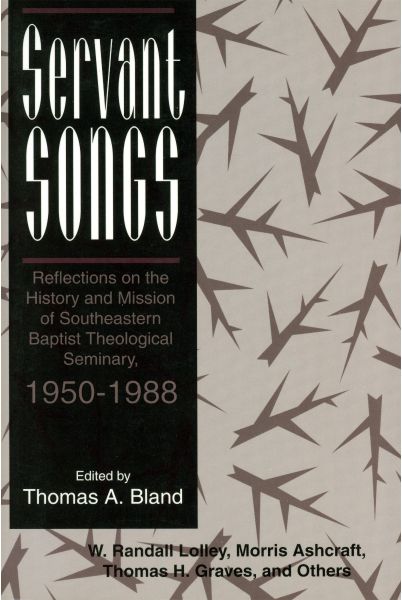
Reflections on the History and Mission of Southeastern Baptist Theological Seminary, 1950-1988
Edited by Thomas A. Bland, Jr.
Bland examines the origin, development, and demise of Southeastern Seminary as a progressive, inclusive, Southern Baptist institution. Twelve contributors, including Randall Lolley, Tom Graves, and Morris Ashcraft, who have served as administrators and/or professors at Southeastern combine objective documentation with subjective reflection as together they tell the story of a unique seminary.
Thomas A. Bland, Jr. is a native of Wake Forest, North Carolina. He is a graduate of Wake Forest University (B.A.), the University of North Carolina at Chapel Hill (M.A., Ph.D.), and Southeastern Baptist Theological Seminary (M.Div. with Languages). His publications include a series of Adult Life and Work Sunday School lessons that he wrote for the North Carolina Baptist newspaper Biblical Recorder (April–June 1992). Bland presently serves on the North Carolina Baptist Stat Convention's General Board and on its Council on Christian Higher Education. He is pastor of Sharpsburg Baptist Church, Sharpsburg, North Carolina.
This book shows convincingly, I think, that—though Southeastern Seminary was founded as a progressive Southern Baptist institution of higher learning; though it did attempt to fulfill its educational mission somewhat differently from its sister seminaries, primarily because of some unique cultural circumstances in the region that it served; though it was characterized by a climate of warm ecumenism and intellectual honesty; and though, somewhat in the great 'pro-humanitate' tradition of Wake Forest University, it did seek to mediate redemptively between the world and the Word—it did not set out to destroy the faith of its students or to denigrate the Bible or to champion the cause of theological liberalism over the cause of Christ.
Bland examines the origin, development, and demise of Southeastern Seminary as a progressive, inclusive, Southern Baptist institution. Twelve contributors, including Randall Lolley, Tom Graves, and Morris Ashcraft, who have served as administrators and/or professors at Southeastern combine objective documentation with subjective reflection as together they tell the story of a unique seminary.
Thomas A. Bland, Jr. is a native of Wake Forest, North Carolina. He is a graduate of Wake Forest University (B.A.), the University of North Carolina at Chapel Hill (M.A., Ph.D.), and Southeastern Baptist Theological Seminary (M.Div. with Languages). His publications include a series of Adult Life and Work Sunday School lessons that he wrote for the North Carolina Baptist newspaper Biblical Recorder (April–June 1992). Bland presently serves on the North Carolina Baptist Stat Convention's General Board and on its Council on Christian Higher Education. He is pastor of Sharpsburg Baptist Church, Sharpsburg, North Carolina.
This book shows convincingly, I think, that—though Southeastern Seminary was founded as a progressive Southern Baptist institution of higher learning; though it did attempt to fulfill its educational mission somewhat differently from its sister seminaries, primarily because of some unique cultural circumstances in the region that it served; though it was characterized by a climate of warm ecumenism and intellectual honesty; and though, somewhat in the great 'pro-humanitate' tradition of Wake Forest University, it did seek to mediate redemptively between the world and the Word—it did not set out to destroy the faith of its students or to denigrate the Bible or to champion the cause of theological liberalism over the cause of Christ.
—from the Preface
Servant Songs
Reflections on the History and Mission of Southeastern Baptist Theological Seminary, 1950-1988

Login and Registration Form