
An Interview with Robert W. Lee
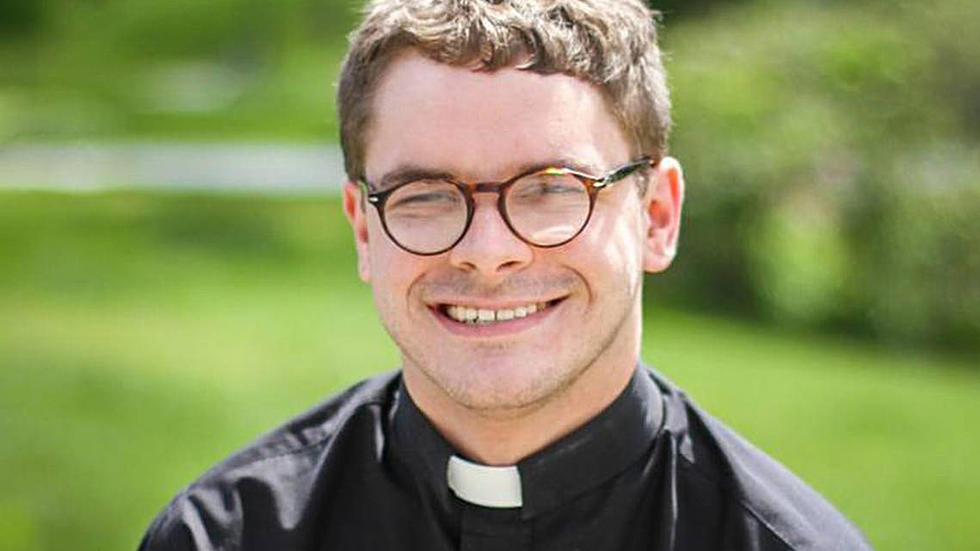
Robert W. Lee
Robert W. Lee is a pastor and the author of five books. He has preached across the world and regularly appears on television.
He was raised in Statesville, North Carolina, and lives there with his wife, two daughters, and two dogs.
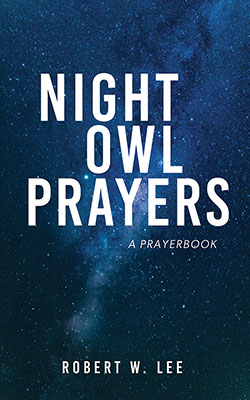
What were you hoping to achieve with your new book, Night Owl Prayers? What do you hope laypeople can take away from this book?
To me, the opportunity to have anyone read anything I write is an incredible honor and one that I don’t take lightly. The book centers around the premise that there may be people like me who either by choice, circumstance, or vocation are up when others are sleeping. It’s no small order to do such a thing and I wanted to show that the reality they face is not only identifiable with others, but there is potential to be in close proximity to God. The notion that nighttime is somehow foreign to God and that darkness is a bad thing is a relatively new phenomenon in the Christian tradition. Whether it was the night that God made the covenant with Abraham or the night that Nicodemus sought Jesus, I believe the Godhead is always up to something.
A few of your books have centered on prayer. What is prayer to you and why do you use it as a focus of your books?
I love this question because it points out a few things. Yes, my last two books have been prayerbooks. Fostering Hope: A Prayerbook for Foster and Adoptive Families was published by Smyth & Helwys in 2022. That said sometimes I don’t see myself as particularly good at individual prayer. These books have both honed my prayer life but also reminded me of the beauty of praying from a book with prescribed words. It helps build rhythm and redundancy. It helps work the prayer muscle in such a way that when you find yourself in need of prayer in the middle of the night the prayers come as second nature to you. I had a friend aptly point out that in times of tragedy he wants a sturdy prayer, meaning one that has been thought out, formed, and shaped by those who have prayed it before him. It is my sincerest prayer that working together with the reader we may form and shape their prayer life so that in moments of confusion, heartache, or levity they might have the lexicon they need to communicate with the Divine.
Can you talk a little about the structure of your book? Why did you put it together in these six categories and how did you choose your prayer themes?
One of my greatest privileges as a writer is that four of my five books have been with Smyth & Helwys. In that vein I have been working with Leslie Andres, my editor since my first book in 2017. We know each other well by this point. She came to me when I had turned the manuscript in and suggested the book needed more structure than what I had. I agreed with her wholeheartedly and we went about thinking of the prayers I had written and the categories they might fall into. One of the more interesting components was when we got to the category “Prayers for Difficult Nights” we realized that some of the prayers were really heavy and could be prayed in moments of crisis. I suggested we add a resource by which those persons who might pick up the book who were in crisis might get the help they need, so we added a portion that denoted how someone might do that.
I’m also really grateful to have had the Very Rev. Gary R. Hall, PhD, write the foreword for the book. For those who might not know I’m not just calling him “The Very Rev.” because he’s more reverend than others, but because he has held the deanship at a cathedral–and a rather well known one at that. Gary was the 10th Dean of the National Cathedral in Washington D.C., and for years had shepherded very large and important services of national consequence. His foreword colors the book in such a way that I can’t imagine the book without his contribution. In my time as an author I’ve been profoundly impacted by those who have come alongside me in the form of a blurb or a foreword. I stand on their shoulders and work to never take their words for granted.
What is the biggest misconception of the nighttime and its relationship with faith? What power does the night hold instead?
As I said before, the idea that nighttime is somehow inferior to daytime hours is a relatively new phenomenon. Some of God’s best work was done in darkness or in the wee hours of the morning “While it was still dark.” The earliest Christians gathered in darkness and during the night to provide a cover for their worship. This stuff is innate within us. Over time and as we have developed a way of working in our time we have neglected the night’s beauty. For me and for many the night has proven to be a place of wonder and possibility for new frontiers of work and learning. Conversely, night can be a place of fear and trepidation when you’re in the car accident or when the phone calls and you know the person on the other line has bad news. All these scenarios show that the night is as fraught as the day and vice-versa. I hope that through prayer we can adjust our expectations of what’s possible through God’s abiding with us in the
dark of night.
In Night Owl Prayers you mention a fear of God, not a fearful God, but the fear that God will show up to your prayers. How can we, as a people of faith, address this fear of being seen by God or having God interact with us?
I never liked the idea of being fearful of God as some preachers espouse and proclaim. In theory I understand what they’re articulating but that’s never been intriguing or compelling for me. What is compelling for me is the idea that God might actually show up in our prayers. Annie Dillard writes that kind of reality should be our real fear. In some ways it’s mind-boggling to realize we are in communion with the One who is in all, through all, and created all things. That’s big time stuff. Even more astounding is that the God we’re talking about desperately wants such communication. I don’t think that fearing God puts us in proximity to God. I believe that in our proximity to God we might be found complete and whole.
How has writing Night Owl Prayers challenged or nurtured your imagination?
The idea for this book was conceived in the late part of 2021 as I was working as a night auditor at a local Hilton hotel in my town. Night auditing is not what I trained to do as a pastor, nor was it what I was intending to do. But in adopting our girls we needed them to be close to their parents and that proved to be a wonderful way for me to be a parent and a professional. I think what I’ve learned in all this, and indeed what has challenged me is the notion that our plans are linear and neatly formed. They are far from it. The throughline though is God’s willingness to be with us in the fires of our own doubts and hopes. God will not abandon us in the moments where we feel most vulnerable. In the United Methodist Morning Prayer liturgy there’s this line, “New every morning is your love, great God of light, and all day long you are working for good in the world…” For me, that shows that love is being reborn again and again during the nighttime hours, and we dare not neglect to thank God for that gift.
Login and Registration Form