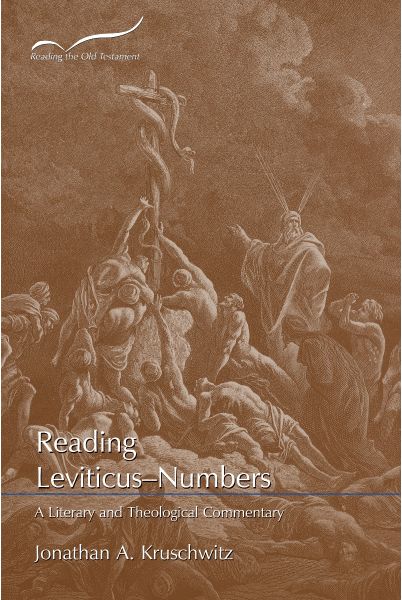
At the heart of the Pentateuch sits the wilderness, where Israel takes its first steps as the people of God. Leviticus and Numbers tell the story of these first steps. On the one hand, there are the steps as outlined by God. On the other hand, there are the steps that the people of Israel actually take. Stories of the people’s resentments, doubts, and fears unfold into a narrative of rebellion and death—and another chance at life.
The wilderness is indeed a “roundabout” way toward freedom and new life (Exod 13:18). The steps, alternately outlined by God and taken by the people of Israel, chart a story of recovery. Through these steps, Israel changes and grows. By interpreting this story alongside two other traditions of recovery, the Desert Tradition of early Christianity and the Twelve-step Program of today, this commentary invites readers to discover among the abstruse and archaic elements of Leviticus and Numbers a font of practical instruction and experience.
A native of Richmond, Virginia, Jonathan A. Kruschwitz holds degrees from the College of William & Mary, the Baptist Theological Seminary at Richmond, and the University of Sheffield. He is an ordained minister in the Christian Church (Disciples of Christ) and Baptist traditions and serves as a bivocational pastor, writer, and religious studies instructor.
At the heart of the Pentateuch sits the wilderness, where Israel takes its first steps as the people of God. Leviticus and Numbers tell the story of these first steps. On the one hand, there are the steps as outlined by God. On the other hand, there are the steps that the people of Israel actually take. Stories of the people’s resentments, doubts, and fears unfold into a narrative of rebellion and death—and another chance at life.
The wilderness is indeed a “roundabout” way toward freedom and new life (Exod 13:18). The steps, alternately outlined by God and taken by the people of Israel, chart a story of recovery. Through these steps, Israel changes and grows. By interpreting this story alongside two other traditions of recovery, the Desert Tradition of early Christianity and the Twelve-step Program of today, this commentary invites readers to discover among the abstruse and archaic elements of Leviticus and Numbers a font of practical instruction and experience.
A native of Richmond, Virginia, Jonathan A. Kruschwitz holds degrees from the College of William & Mary, the Baptist Theological Seminary at Richmond, and the University of Sheffield. He is an ordained minister in the Christian Church (Disciples of Christ) and Baptist traditions and serves as a bivocational pastor, writer, and religious studies instructor.


Login and Registration Form