
An Interview with Bill Shiell

Bill Shiell
Bill Shiell is a pastor, author, and leadership mentor with over two decades of experience in ministry and higher education. From leading churches in Texas, Tennessee, and Florida to serving as President of Northern Seminary in Illinois, Bill’s journey has been marked by a commitment to spiritual growth, joy through hardship, and equipping others to lead with grace. He blogs at www.billshiell.com.
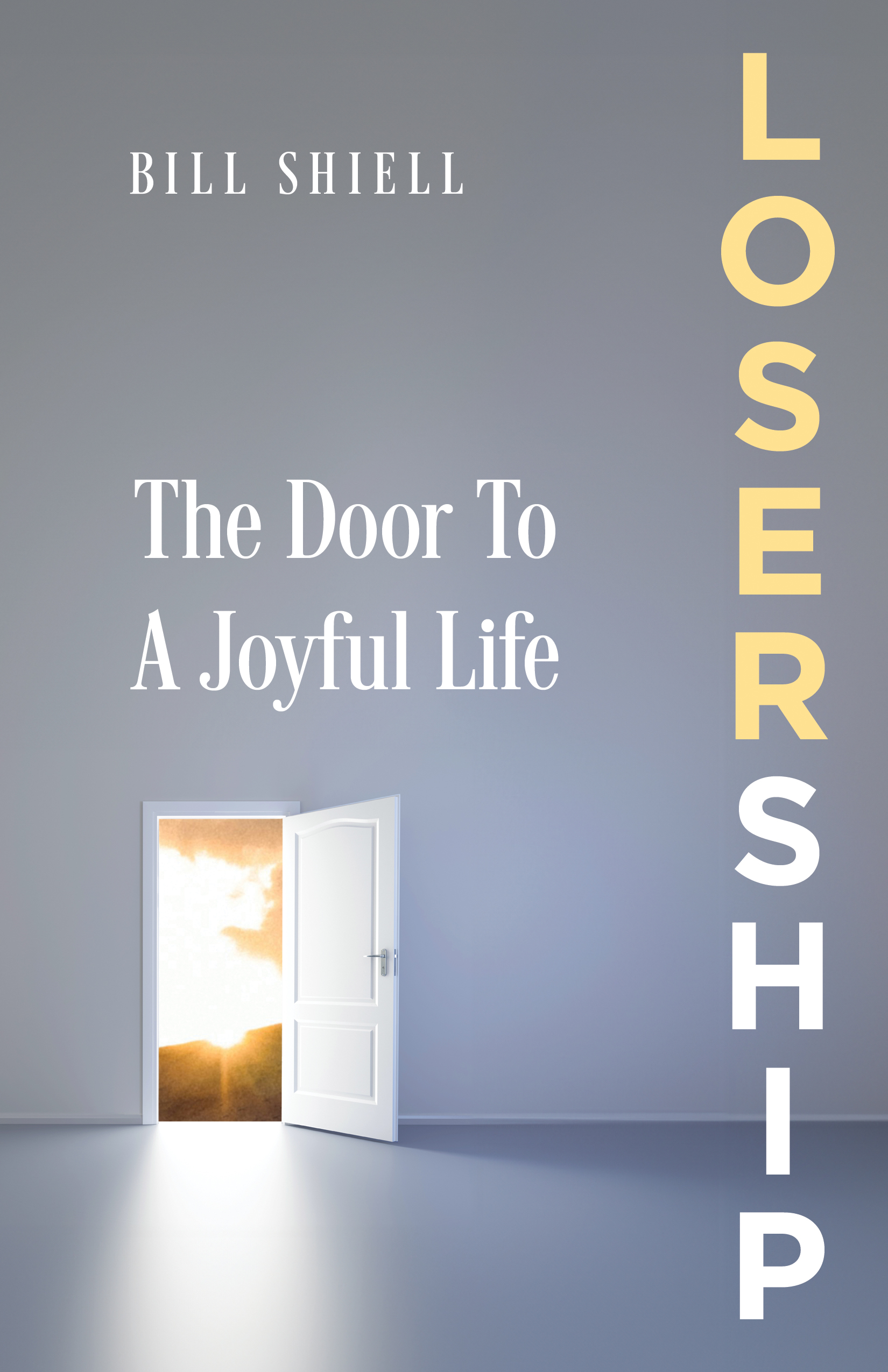
What was your goal when you began writing Losership: The Door to a Joyful Life? What do you hope readers will take from it?
I wanted graduating seniors to wrestle with questions that we wait until midlife or later to ask. The path to a joyful life runs through loss and failure. Adults going through career transitions or family struggles can find tools to help them heal and wisdom to share with others.
Where did the term “losership” come from, and how is it distinctive from ‘leadership’?
After writing the first draft, I realized that this book would possibly fall into the category of “Christian leadership,” but I didn’t want it to be confined to that genre. When I told my pastor about the book, he asked me, “What do you want to title it?” I responded, something like, “Losership,” based on Mark 8:35. And he said, “That’s a great title!” Christian leadership is associated with a higher rank, greater responsibilities, and more financial resources. However, this Christian leadership culture has the opposite effect of what Jesus taught. Leaders become more self-focused. We teach leaders to advance their careers, help their organizations grow, or increase revenue for themselves.
What I found surprising in my own journey is that this mentality of leadership is very different from the churches and organizations I’ve served. I was always called to places that you might describe as “turnarounds,” and the best “leaders” were often overlooked by other organizations. As a young pastor, I remember calling a “Christian” leadership group for consulting and advice, and they would not return my phone call. My church wasn’t large enough for them.
I’m not against leaders. We still need them, and leadership is a theme of the Bible. However, we’ve just defined biblical leadership incorrectly.
The central idea of losership is that our best leaders are individuals who have learned from their weaknesses and possess the ability to seek out others who have faced similar challenges. Losership challenges us to sacrifice the ambitious parts of life for the good of others.
What are the biggest misconceptions surrounding suffering and joy in attaining a seemingly successful life?
There are at least 11 different kinds of suffering mentioned in the Bible, so the biggest misconception is that we can treat all suffering the same way. In this book, I focus on losses that result from the mistakes we make and those made by others that affect our lives. I’m navigating the gap between expectations and reality, especially in Christian organizations. I’m reframing the idea that suffering, failure, and loss are learning opportunities, not consequences or punishments for bad decisions.
Joy is often discussed only in the season of Advent, and usually as an emotional response to something that happens to us for my salvation. But in the Bible, joy takes on multiple expressions. First, it’s a decision in the face of incredible challenges (think Mary and Elizabeth here). Joy is part of the future that God has in store for us. So as Moltmann once wrote, joy is something we are turning toward or returning to. We once had joy in our lives and will one day experience it fully in God’s presence. Third, joy is the great delight God has in us. We hear this in the parable of the talents, “Come, share in the joy of the master!” God is so pleased with us and wants to give us more responsibilities in this life. Fourth, joy was a goal that Jesus experienced through suffering on the cross (Hebrews 12:2). Fifth, joy occurs when we take delight in another person’s success. The ultimate expression of joy for the believer is to find oneself so proud of someone else’s accomplishments.
What is “Achievement Christianity” and how can we, as a people of faith, be mindful of its effects in our church community and personal lives?
For people who have studied the Old Testament, you will likely recognize Achievement Christianity as a revised form of the old “Deuteronomic theology”—the idea that God blesses those who are devoted to Him with material things, promotions, a higher standard of living, and well-behaved children and grandchildren. We assume that tangible benefits will accompany the “plans I have for you” in Jeremiah 29:11. Through technology and other means, we become obsessed with ensuring our children and grandchildren have the best of everything, overlooking the role that failure, weakness, and loss can play in teaching us the mindset of joy. We also overlook the people who could be outstanding leaders but don’t exhibit the qualities of potentially “high achievers.” One symptom of achievement Christianity is taking life, faith, and work too seriously. When we stop laughing, we miss out on the joy.
Can you break down Losership’s structure? How did you decide the progression of the chapters and discussion questions?
I first tested these chapters with a group of students in our church youth group on a Google chat group and in a Wednesday night Bible study. I had worked with most of them for seven years, and I wanted their honest feedback. Most of them don’t read books, and they suggested that the chapters be shorter and easier to digest. I formatted the chapters so that they can be skimmed on the way to class, read in the evening before bed, and discussed in a group chat.
I began the book with a diagnosis of the problem and then a brief Bible study on the theme from Mark 8:35. I wanted to discuss the why and the problem of loss before discussing the “how” of the second half. Chapters four through eight are about the journey “up from the basement,” so to speak. Using the classroom metaphor, I view failure as a good teacher, and the steps we take as God’s gifts to us as we begin to grow and move through the doorway of joy.
How was the writing process different for you with Losership than your previous books? What elements of this book surprised or challenged you?
I’ve been thinking and reflecting on these concepts for a long time and trying to make sense of Mark 8:35 throughout my life. I had taken notes on the passages in Philippians for another book project. Coincidentally, that publisher canceled my contract for that project after I resigned from my role at the seminary. So that “loss” freed me up to have time to write this book. A very kind family in my church offered for me to use their vacation home. I scheduled four days in October 2023 and returned with the first draft. I had never written a draft that quickly.
I was surprised by how quickly the words flowed out, and then I wondered if I had anything to offer people beyond myself and my immediate circle of small groups. Writing is a healing process for yourself, but it’s hard to know if anyone else needs what you’ve written! I’m so grateful to my friend Jeff Crosby for reading through it the first time and offering constructive suggestions. He was the first one to say that this book was worth sharing with others.
You mention how failure is a great teacher. What advice do you have for those who are amid loss and can’t seem to find the door to a joyful life?
Know that you’re not alone. The greatest deceit that achievement Christianity wants us to think is “I’m the only one that has __________.” Share your story with someone else. Open yourself up to the possibility that there might be a friend who will be able to help you. Give yourself permission to sit with grief and failure and invite yourself to think like a beginner. Don’t try to figure out what to do. Start thinking about how to think again. This usually begins with a nice cup of tea, a journal, and a friend. When we start anew, we need to retrain our brains and bodies to think about God, ourselves, and the people around us. If this were your first day of life as a toddler, how would you experience life knowing what you know now? How would you apply this experience to help you learn to crawl, walk, and then run? Be gentle with yourself, knowing that you will fail as you learn to take the first step. Begin to track your thoughts around the eight virtues from Philippians 4. Try to think about and reinforce things in your brain that you know to be true, honorable, just, holy, pleasurable, reputable, virtuous, and praiseworthy.
When did scripture come alive to you? How do you enjoy spending your time outside of ministry?
I started memorizing scripture at a really young age, but scripture came alive to me when I was working on my dissertation. I realized all the work of memorization could be connected to the live performance of passages. As I recited passages and began to teach students how to reenact stories, I saw the effect the oral performance of scriptures had on others and realized at a different level how the Bible is living and active.
Login and Registration Form