
An Interview with Caroline Smith

Caroline Smith
Caroline Smith is a pastor and author who has ministered on multiple continents, including years of service in South Africa. She holds a PhD in Preaching from Baylor University and lives in Atlanta with her husband and two children.
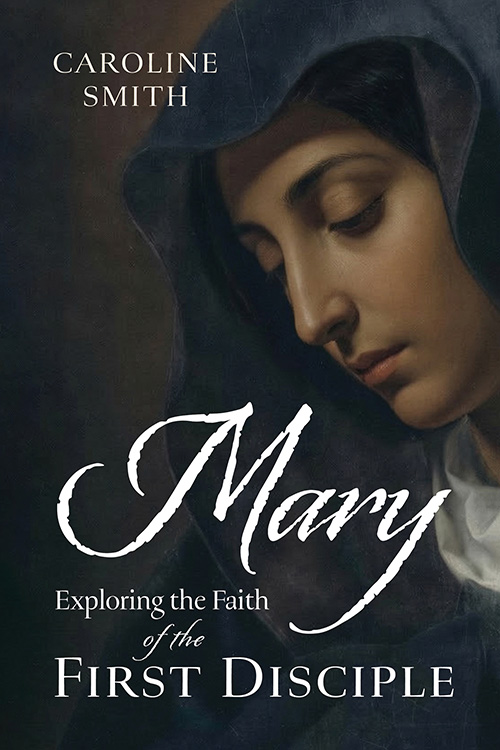
Mary’s character in your book is a fresh departure from how we see typically her. What drew you to exploring Mary’s character beyond her traditional depiction as “mother of Jesus”?
When visiting churches in Rome, I was struck by how often I encountered Mary. Her image was everywhere, and her name appeared in countless forms. I found myself intrigued by how deeply important and honored she was, especially because, when I thought about her, I realized how little I actually knew about her. I knew her primarily as the mother of Jesus, but what did that really mean?
When I lived in Africa, people often referred to me as “Mother of Bella,” my daughter. I have always loved being the mother of my children. It is one of the deepest and most meaningful parts of who I am. But I am also much more than “mother of.” I have my own story, my own experiences, my own fears and hopes, and my own relationship with God. If I could recognize that in myself, I began to wonder, what had we missed about Mary by reducing her primarily to “mother of Jesus”?
And then I began to think about what it actually meant that she was Jesus’ mother. Who knows us more intimately than our mother? Mary was with Jesus throughout much of his life. She would have known him not simply as the Messiah, but as her son. She would have known his personality, his joys, his struggles, and his fears. She may have been the person to whom he could speak about the things that troubled him in ways he could not speak to anyone else. She would have comforted him, challenged him, worried about him, and loved him.
The more I considered Mary in this way, the more I realized that knowing her might actually bring me closer to knowing Christ. I became interested not simply in Mary as the mother of Jesus, but in Mary as a woman, a disciple, and the person who knew Jesus more intimately than perhaps anyone else ever could.
You mention in the introduction that protestant denominations tend to shy away from drawing closer to Mary. What could readers of Mary: Exploring the Faith of the First Disciple gain from drawing closer to Mary and her story?
Drawing closer to Mary and her story can only draw us closer to Christ. By knowing her better, we come to know Christ better. Think about how much more we understand someone when we meet their family. We learn things about them that we could never learn from knowing them alone. I think it is the same with Jesus. Mary knows the embarrassing preteen stories. Mary knows his favorite dessert. Mary knows how to make him laugh. She knew Jesus not simply as the Son of God, but as her son.
Knowing and understanding Mary also helps us better understand the place and role of women in the ministry of Jesus. Mary was there, faithful from the beginning. And she was not alone. Jesus consistently honored the women around him, listened to them, received their ministry, and treated them with dignity and compassion. Women were not peripheral to the story of Jesus; they were integral to his life and ministry.
I think drawing closer to Mary helps us see something we can too easily overlook: from the very beginning, women were essential participants in the story of Christ. Mary’s story invites us to see that more clearly and, in doing so, to see Jesus more clearly as well.
Your description of the Magnificat as being a song of rebellion and a revolutionary manifesto of mercy and justice feels especially powerful in our current cultural context. Where do you see Mary’s manifesto being the most significant culturally? How can we ground this in our daily lives to “live the Magnificat”?
Too often, we create God in our own image. We assume that our greatest concerns must also be God’s greatest concerns, and that God feels about the world exactly as we do. The Magnificat challenges that tendency.
When we actually listen to what Mary is singing, we encounter a God who sees the lowly, brings down the powerful, lifts up the poor, and fills the hungry. And when we remember that these words were sung by the woman who raised Jesus, they become even more significant. Mary’s song gives us a glimpse into the faith that shaped Jesus himself. The biblical commands to welcome the stranger, care for the vulnerable, and protect the orphan are not simply abstract religious principles; they reveal something about the heart of God.
I think this becomes particularly significant in the way we think about borders and the instinct to divide the world into “us” and “them.” We naturally want to protect what we consider to be “ours”—our families, our neighborhoods, our finances, our safety, our way of life. We want to make sure that our children are safe and that there is enough for our own families before we worry about anyone else. Those instincts are understandable, but Mary’s song asks us to see beyond them. The God Mary proclaims is not concerned only with those who already belong to us. God sees those we consider to be stranger, the hungry, the vulnerable, and the person standing outside the boundaries we have drawn.
To “live the Magnificat” means allowing Mary’s vision to reshape the way we see the world. It means noticing who is being overlooked, making room for the stranger, standing with those who have little power, and asking whether our desire to protect our own has prevented us from seeing the humanity of others. It means allowing Mary's song to become more than something we read in Scripture or sing in church. It becomes a way of seeing and ultimately a way of living.
In an increasingly secular world, how can we see and embrace the quiet unfolding of miraculous mystery in the ordinary, as Mary did? Have you experienced moments that asked you trust the mystery within the ordinary?
I think one of the great challenges of faith in an increasingly secular world is that we have come to expect God to show up in extraordinary ways. We look for the burning bush, the angel, the miracle, and in doing so, we can miss the reality that God is present in the ordinary.
Mary teaches us something different. Her life was, for the most part, remarkably ordinary. She was a young woman who was engaged to be married, making plans for her future, living within her family and community. Nothing about her life suggested that history was about to change. And then, in the middle of that ordinary life, something began to unfold.
What strikes me is that Mary didn't get to step outside of ordinary life to experience the miraculous. She had to carry the mystery with her into the most ordinary parts of life. She was pregnant, gave birth, raised a child, worried about him, fed him, watched him grow. The mystery was not separate from her ordinary life; it was the ordinary life.
I think that is an important lesson for us. We don't wait for something spectacular to happen before we look for God. Sometimes the invitation is simply to pay attention, to turn aside, as Moses did at the burning bush, and notice what we might otherwise walk past.
I have certainly had moments when I have looked back on ordinary encounters or experiences and realized that they carried more significance than I recognized at the time. But I am increasingly convinced that the deeper spiritual practice is learning to notice while we are living the moment, rather than waiting until afterward to call it miraculous.
Perhaps what Mary offers us in an increasingly secular world is not a formula for finding miracles but an invitation to live with our eyes open. The sacred may not always announce itself. Sometimes it is unfolding quietly in the middle of an ordinary Tuesday, and the question is simply whether we will turn aside and notice.
You show us a striking example of Mary’s journey and her challenge for us in the stories of Mary’s flight to Egypt with her infant son and the refugee mother crossing the Darién Gap. What made your encounter with the refugee mother in Texas feel like a “Mary moment”?
What made my encounter with this woman feel like a “Mary moment” was realizing that Mary’s story is not as distant from us as we sometimes imagine. I met the woman in Texas not long after she had traveled through the Darién Gap with her newborn baby. She had made the dangerous journey through the jungle between Panama and Colombia, carrying her tiny child through physical danger, exhaustion, and the constant fear of what lie ahead.
As she told me about those days and nights, I kept thinking about Mary. Here was another young mother carrying her child through danger, uncertainty, and an unknown future. Her story was not simply one of suffering. It was a story of courage and determination. She kept moving because she loved her child. Fear was present, but it did not have the ultimate power.
That encounter also helped me see Mary differently. We can sometimes turn Mary into a distant religious figure such as an icon, a statue, “the mother of Jesus” (like I saw in Rome) and forget that she was a young mother who knew what it meant to be vulnerable, afraid, displaced, and responsible for the life of a child. The woman I met in Texas made Mary feel suddenly present. I could see, in a contemporary mother making her way toward safety, something of the courage and hope that must have carried Mary toward Egypt.
A “Mary moment” is realizing that Mary’s story is not only something we look back on. It is a story we continue to encounter in the lives of mothers who carry their children toward hope in the face of unimaginable uncertainty.
You describe Mary as being sensitive to silence and lack in a profound way, such as the beginning of Jesus’s ministry and his burial. How can we apply a similar sensitivity to our lives as Christians? Have you witnessed moments where someone filled the gap or held silence?
I think one of the ways we can become more attentive Christ followers is by learning to notice what is missing. We are often much better at noticing what is happening than what isn't happening. We notice the person who is speaking, but not the person who has gone quiet. We notice the celebration, but not the person who is grieving.
Mary seems to have had a remarkable sensitivity to those spaces we tend not to notice. She noticed the lack of wine at the wedding in Cana before anyone else seemed to act. And at the end of Jesus’ life, she remained present in the silence of his death and burial. There was nothing she could fix. There was nothing she could say that would make it better. Yet, she remained.
I think that is a deeply spiritual practice. Sometimes faithfulness means filling a gap. Sometimes it means resisting the urge to fill it. Sometimes someone needs us to bring what is missing; other times they simply need us to sit beside them in the silence.
I have witnessed the power of this most often in small moments. There are times when someone doesn't need an answer or an explanation or another person telling them that everything will be okay. They need someone willing to sit with them in what is difficult. And there are other moments when what is needed is more tangible such as a meal, a phone call, a ride, a person who notices what everyone else has overlooked.
Perhaps to develop Mary's sensitivity means to pay attention to the empty spaces. To ask, “What is missing here? Who is missing? What has gone unsaid?” And then to discern whether this is a moment to speak, a moment to act, or simply a moment to be present.
We live in a culture that is very uncomfortable with silence and very quick to fill every gap. Mary reminds us that sometimes the most faithful thing we can do is notice the emptiness, refuse to rush past it, and be willing to remain there long enough for God to do something with it.
In the Appendices of the book, you include a few Marian prayers, like the Fatima Prayers. What do you like about these prayers? What can a largely Protestant audience take away from Marian prayers?
What I love about Marian prayers is that they give us another way of approaching Jesus. At first, that may sound strange to a traditionally Protestant audience. We have often been taught to be cautious around Mary, and many of us have inherited the idea that even considering Mary somehow takes attention away from Christ. But as I spend time with these prayers, I began to see them differently.
What I appreciate about prayers such as the Fatima Prayers is their simplicity and their focus on Jesus. They are prayers that invite us to slow down, to remember, and to turn our attention toward Christ. They allow prayer to become less about finding the perfect words and more about simply being present to God.
I also think Protestant Christians can learn something from the wider Christian tradition of praying with Mary. We don't have to adopt every Marian practice or resolve every theological difference in order to listen to what Christians have discovered through centuries of prayer. These prayers invite us to recover the beauty of repetition, silence, mystery, and embodied devotion.
And perhaps most importantly, these prayers remind us that Mary herself was a person of prayer. She was the woman who said yes to God, who pondered things in her heart, who remained present through Jesus' suffering, and who stayed with the disciples after his death. Learning to pray with her can therefore become another way of learning to follow Christ.
For a Protestant audience, I hope these prayers feel less like an invitation to cross some theological boundary and more like an invitation to discover something we may have overlooked.
Are there any depictions of Mary, such as in art or prayer, that you would like readers to connect with as they read Mary: Exploring the Faith of the First Disciple?
I don't think there is one specific depiction of Mary that I want readers to connect with. One of the things I hope readers discover through the artwork in the book is that each image introduces or enhances a different characteristic of Mary that we can engage with.
For example, Our Lady of Guadalupe presents Mary in a way that is deeply connected to Mexican and Indigenous identity. The image itself communicates humility, compassion, and a sense of Mary’s presence among people who might otherwise feel unseen.
I also love the images of African Mary. They help us imagine Mary outside of the overwhelmingly European images that have shaped so much of Western Christianity. An African Mary invites us to see her as a woman who belongs to the whole world, and how different cultures encounter her through their own experience, beauty, and imagination.
Then there is Michelangelo's Pietà, which has become such a familiar image. Here, when we actually look at Mary holding the body of her dead son, we are confronted with her grief, her tenderness, and the true cost of loving someone. Mary is not simply the mother who gives birth to Jesus; she is also the mother who stays when everything has fallen apart.
And I particularly love Van Gogh's Pietà. He based his painting on Delacroix's Pietà, but his version feels different to me. There is something raw and almost unsettled about it. Van Gogh's Mary becomes a woman of sorrow and suffering, someone who knows what it means to experience pain and rejection.
Those are the kinds of images I hope readers will encounter throughout the book. I don't want them simply to look at a picture and decide, “This is what Mary looked like.” I want them to ask, “What is this artist helping me see about Mary that I might otherwise miss?”
Perhaps Guadalupe helps us see Mary's universality. An African Mary helps us see her beyond our cultural lens. The Pietà helps us see her capacity for grief and presence. Van Gogh's Pietà helps us see Mary as a woman acquainted with suffering.
Each image gives us another piece of the woman. And as those pieces accumulate, I hope we begin to see Mary more as a complex, courageous, faithful woman whose life can still teach us how to follow Christ.
Login and Registration Form